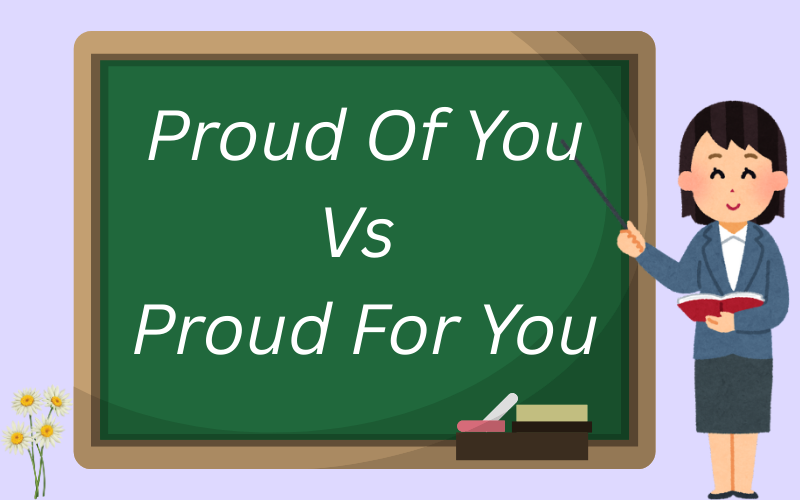

Language has a funny way of hiding big meaning inside very small words. One tiny preposition can quietly change the emotional weight of an entire sentence. That’s exactly what happens with the expressions “proud of you” and “proud for you.” They look almost identical, sound nearly the same, and yet native speakers strongly prefer one over the other.
If you’ve ever paused and wondered which phrase is correct—or why one feels natural while the other feels slightly off—you’re not alone. This confusion is common among English learners and even advanced speakers.
In this in-depth, original guide, you’ll explore the grammar, emotional nuance, cultural background, and real-life usage of “proud of you” versus “proud for you.” By the end, you won’t just know the rule—you’ll feel the difference, just like a fluent native speaker.
Why This Small Difference Matters
English prepositions may be short, but they carry powerful meaning. Words like of, for, to, and about shape how emotions, actions, and relationships connect. When used incorrectly, they can make a sentence sound unnatural, distant, or robotic.
Consider these two sentences:
- “I’m proud of you for finishing the marathon.”
- “I’m proud for you for finishing the marathon.”
Both are understandable. Both are positive. But only one sounds fully natural to native speakers. The reason lies not in grammar alone, but in emotional direction.
Understanding this difference helps you:
- Sound more fluent and confident
- Express emotions more accurately
- Avoid literal translations from other languages
- Communicate warmth and connection, not distance
This is not just a grammar lesson—it’s a lesson in emotional precision.
What “Proud of You” Really Means
“Proud of you” is the standard, deeply rooted expression used in everyday English. It directly connects the speaker’s feeling of pride to another person’s actions, character, or growth.
When you say:
“I’m proud of you.”
You are essentially saying:
“What you did, or who you are, makes me feel proud.”
The pride belongs to the speaker, but its source is the other person.
Common Situations for “Proud of You”
This phrase appears naturally in many emotional contexts:
Achievements
- “I’m proud of you for graduating.”
- “We’re proud of you for starting your own business.”
Personal Growth
- “I’m proud of you for becoming more confident.”
- “I’m proud of you for learning from your mistakes.”
Moral Choices
- “I’m proud of you for telling the truth.”
- “I’m proud of you for standing up for yourself.”
Emotional Depth
“Proud of you” expresses admiration, approval, and emotional closeness. It signals that the speaker feels personally connected to the achievement or behavior. This is why the phrase is so powerful in families, friendships, and romantic relationships.
Parents use it to encourage children. Teachers use it to motivate students. Friends use it to recognize effort. Partners use it to show respect and belief.
Few English phrases carry as much emotional affirmation as “I’m proud of you.”
What “Proud for You” Means
Now let’s look at the less common option.
“Proud for you” does exist in English, but it is rare and highly situational. Instead of expressing admiration, it expresses happiness on someone’s behalf.
When someone says:
“I’m proud for you.”
The implied meaning is closer to:
“I’m happy that this happened to you.”
The focus is not on the speaker’s pride as a result of the person’s qualities, but on emotional goodwill toward the person’s situation.
Why It Feels Unnatural
In everyday English, the emotion of pride is usually inwardly experienced and outwardly directed at someone. Using for creates emotional distance, making the sentence feel indirect or formal.
That’s why native speakers almost always prefer:
- “I’m happy for you.”
- “I’m thrilled for you.”
These phrases fit the emotional purpose more naturally.
Rare Contexts Where It Works
“Proud for you” may appear in:
- Formal speeches
- Poetic writing
- Ceremonial language
Examples:
- “We are proud for you and your accomplishments today.”
- “I’m proud for you, seeing how far you’ve come.”
Even in these cases, many native speakers would still choose “proud of you” or “happy for you” instead.
The Grammar Behind the Difference
To truly understand why one phrase dominates English usage, we need to look at how prepositions function.
The Role of “Of”
The preposition of often shows source, origin, or connection.
- “Afraid of spiders”
- “Fond of music”
- “Proud of you”
In all of these, the emotion comes from the speaker and is directly linked to the object.
The Role of “For”
The preposition for often shows benefit, purpose, or support.
- “Happy for you”
- “Sorry for you”
- “I did this for you”
Using for shifts the emotion into a supportive, external position.
Emotional Direction
Think of it this way:
- Proud of you → emotional connection and admiration
- Proud for you → emotional goodwill at a distance
Because pride in English is usually something we feel because of someone, “of” is the natural choice.
Why Learners Make This Mistake
Many English learners translate directly from their native language, where the equivalent of “for” is used with pride.
For example:
- Spanish: orgulloso por ti
- Italian: orgoglioso per te
- French: fier pour toi
When translated word-for-word, “proud for you” seems logical. But English does not follow the same emotional mapping.
This is a classic example of why literal translation doesn’t always work. English collocations—words that naturally go together—are shaped by long-term usage, not logic alone.
Native Speaker Intuition and Usage Patterns
Native speakers don’t analyze this consciously. They grow up hearing “proud of you” in homes, schools, movies, books, and public speeches.
Over time, the phrase becomes emotionally ingrained.
Anything else—“proud for you,” “proud about you,” “proud on you”—sounds unusual because it breaks that familiar pattern.
Language data strongly supports this intuition. Usage studies consistently show “proud of you” appearing vastly more often than “proud for you” in modern English.
Frequency shapes fluency. What is heard more feels more natural.
Emotional and Cultural Weight of “Proud of You”
In English-speaking cultures, saying “I’m proud of you” is not just informational—it’s relational.
It communicates:
- Recognition of effort
- Emotional support
- Belief in someone’s abilities
- Validation of identity
This is why the phrase is so common in moments of vulnerability or growth.
Cultural Contexts
- Parents use it to encourage children’s confidence.
- Teachers use it to motivate perseverance.
- Leaders use it to build morale.
- Friends and partners use it to express respect.
In many cases, hearing “I’m proud of you” can have a stronger emotional impact than rewards or praise.
When “Proud for You” Is Acceptable
Although uncommon, there are moments when “proud for you” is not wrong.
Formal or Collective Pride
In group or institutional settings:
- “Our organization is proud for you and your success.”
This sounds ceremonial rather than conversational.
Emotional Distance
When the speaker wants to show goodwill without personal involvement:
- “Your parents must be so proud. I’m proud for you.”
Even here, many speakers would still choose “happy for you.”
Common Errors to Avoid
| Incorrect Phrase | Problem | Correct Version |
| Proud for you | Unnatural in daily speech | Proud of you |
| Proud about you | Wrong collocation | Proud of you |
| Proud on you | Not used in English | Proud of you |
Simple Rule
Ask yourself:
- Am I admiring the person? → Use “of”
- Am I simply happy for them? → Use “happy for you”
When in doubt, “proud of you” is almost always the safe and natural choice.
Fluent Alternatives to Express Pride
Sometimes variety matters. English offers many natural ways to express similar emotions.
To Show Admiration
- “You make me proud.”
- “I really admire what you’ve done.”
- “That took courage.”
To Show Happiness
- “I’m so happy for you.”
- “You must be excited.”
- “Congratulations—you earned this.”
To Show Connection
- “You’ve come a long way.”
- “You inspire me.”
- “Your success means a lot to me.”
Using the right phrase for the right emotion is what separates fluent speakers from literal translators.
Psychological Impact of Expressing Pride
Research in psychology consistently shows that recognition strengthens motivation and self-esteem.
When someone hears:
“I’m proud of you for not giving up.”
They don’t just hear praise—they hear acknowledgment of effort, resilience, and identity.
This kind of affirmation:
- Builds confidence
- Encourages persistence
- Strengthens relationships
Words matter, especially when they validate growth rather than just results.
Frequently Asked Questions
Is “proud for you” grammatically wrong?
No, but it is stylistically rare and usually replaced by more natural expressions.
Why does “proud of you” sound more emotional?
Because it directly connects the speaker’s pride to the person’s actions or character.
Can I ever use “proud for you” in daily conversation?
You can, but “happy for you” will almost always sound better.
What should I remember most?
Pride in English flows from the speaker because of someone—so “of” fits naturally.
Final Thoughts Say It With Confidence
The difference between “proud of you” and “proud for you” is subtle, but meaningful. One expresses admiration and emotional connection. The other expresses supportive happiness from a distance.
If your goal is to sound natural, warm, and fluent, let this simple principle guide you:
When you feel pride because of someone, say “I’m proud of you.”
Mastering small distinctions like this is what transforms good English into confident, expressive communication.
And now—you can be proud of yourself for learning it.
Conclusion
The difference between “proud of you” and “proud for you” is small in form but powerful in meaning.
“Proud of you” expresses admiration, emotional connection, and shared pride—making it the natural, fluent choice in everyday English. “Proud for you” simply shows happiness on someone’s behalf and sounds distant or formal in most situations.
If you want to sound natural and emotionally precise, remember this rule:
Admiration and connection → “proud of you.”
Simple happiness → “happy for you.”