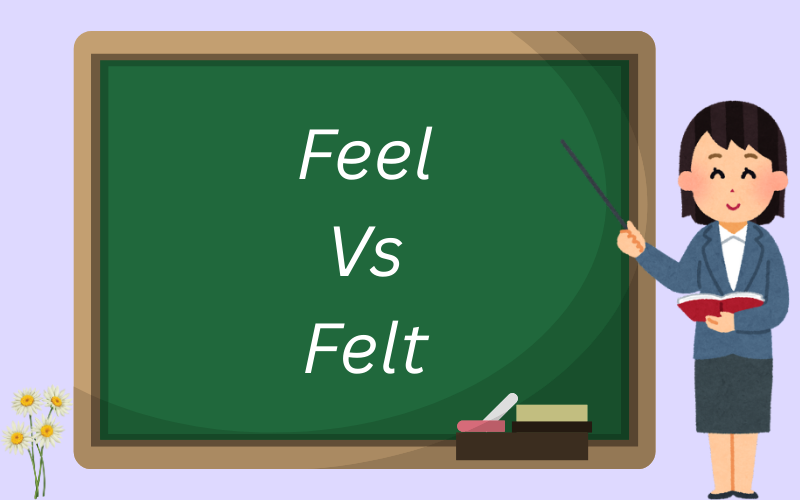

Have you ever paused while speaking or writing and wondered, “Should I say feel or felt here?” You’re not alone. This small grammar choice confuses many English learners and even native speakers because both words come from the same verb but belong to different moments in time. When emotions and experiences are involved, choosing the correct tense can make the difference between sounding natural and sounding slightly off.
In simple terms, feel usually refers to emotions or sensations happening now, while felt describes something experienced in the past. But real-life English isn’t always that straightforward. Feelings can continue over time, and the way we describe them can change the meaning and tone of a sentence. In this guide, you’ll learn the clear difference between feel vs felt, when to use each one, common mistakes to avoid, and easy examples that will make the rule stick.
Why “Feel” vs “Felt” Confuses Even Advanced Learners
At first glance, the rule looks simple:
- Feel → present or general time
- Felt → past time
So why do people still struggle?
Because emotions don’t always stay neatly in one time frame. A feeling can start yesterday, continue today, and affect tomorrow. English uses tense to show where you are standing emotionally when you speak.
Compare:
- “I feel disappointed.” → You are inside the emotion.
- “I felt disappointed.” → You are looking back at the emotion.
That emotional distance is where most mistakes—and misunderstandings—happen.
What Does “Feel” Really Mean?
The verb feel connects your inner experience to language. It can describe:
- Emotions
- Physical sensations
- Mental impressions
- Personal opinions
It is one of the most flexible verbs in English.
Core Meaning of “Feel”
Feel means to experience something now, usually in the present or as a general truth.
Examples:
- “I feel happy today.”
- “I feel nervous before presentations.”
- “I feel this plan will work.”
In each case, the speaker is emotionally or mentally present in the experience.
Everyday Uses of “Feel”
1. Physical Sensations
Use feel when describing what your body experiences now:
- “I feel cold.”
- “My hands feel numb.”
- “Do you feel the heat?”
2. Emotions and Moods
This is the most common use:
- “I feel excited about the trip.”
- “She feels anxious lately.”
- “They feel hopeful.”
3. Opinions and Judgments
Feel often replaces think when the opinion is personal or emotional:
- “I feel this decision is unfair.”
- “We feel the design needs improvement.”
This sounds softer and more human than “I think.”
Grammar Patterns with “Feel”
| Structure | Example | Meaning |
| Present Simple | I feel calm. | Ongoing state |
| Present Continuous | I’m feeling tired. | Temporary feeling |
| With Adjectives | She feels confident. | Linking verb |
| With Clauses | I feel that he’s right. | Opinion |
| With Modals | You should feel proud. | Advice |
Important note: “Feel” works like a linking verb. It connects the subject to a description, not an action.
When “I’m Feeling” Sounds Better Than “I Feel”
Both are correct, but they are not identical.
- “I feel tired.” → Neutral, factual
- “I’m feeling tired.” → Temporary, right now
Native speakers often use I’m feeling when the emotion is changing or momentary.
Understanding “Felt”: The Language of Memory
If feel lives in the present, felt lives in reflection.
Felt is the past tense and past participle of feel. It shows that the experience already happened.
Examples:
- “I felt relieved after the exam.”
- “She felt ignored at the meeting.”
- “We felt proud of our progress.”
In each case, the speaker has stepped back from the emotion.
Common Situations Where “Felt” Is Required
1. Finished Moments
If the feeling belongs to a completed time, use felt:
- “I felt nervous before the interview.”
- “He felt sick yesterday.”
2. Storytelling and Narration
Stories often use felt to describe emotional reactions:
- “She felt a sudden fear.”
- “I felt something was wrong.”
3. Reflection and Evaluation
When analyzing past experiences:
- “I felt I could have done better.”
- “They felt the project failed due to poor planning.”
Grammar Forms with “Felt”

| Tense | Example | Usage |
| Simple Past | I felt confident. | Specific past moment |
| Past Perfect | I had felt uneasy earlier. | Earlier past |
| Present Perfect | I have felt this before. | Past affecting present |
| Passive | It was felt deeply. | Formal tone |
“Have Felt” vs “Felt”: A Subtle but Crucial Difference
Many learners confuse these two.
- “I felt lonely.” → One specific time
- “I have felt lonely.” → Repeated or ongoing experience
Have felt suggests the emotion still matters now.
Choosing Between “Feel” and “Felt” in Real Life
Ask yourself one question:
When did the feeling exist—from my current point of view?
Use “Feel” When:
- The emotion is happening now
- The feeling is habitual
- You want emotional closeness
Examples:
- “I feel motivated today.”
- “I feel stressed during exams.”
Use “Felt” When:
- The emotion belongs to the past
- You are narrating or analyzing
- You want emotional distance
Examples:
- “I felt discouraged last year.”
- “She felt misunderstood at the time.”
Emotional Tone: Why Tense Changes Impact
Compare these two sentences:
- “I feel betrayed.”
- “I felt betrayed.”
The first sounds raw and immediate. The second sounds processed and reflective.
Writers, speakers, and therapists use this shift intentionally.
Idiomatic Expressions with “Feel”
English loves idioms with feel because it reflects instinct and emotion.
| Expression | Meaning | Example |
| Feel free | Permission | Feel free to ask |
| Feel like | Desire | I feel like resting |
| Feel for someone | Sympathy | I feel for her |
| Feel at home | Comfort | Make yourself feel at home |
| Feel under the weather | Sick | I feel under the weather |
Idioms with “Felt”
- “I felt it in my gut.”
- “The tension was felt immediately.”
Advanced Structures: Modals + Feel
Modal verbs adjust certainty and emotion:
- “I can feel something changing.”
- “You should feel confident.”
- “They might feel disappointed.”
With past modals:
- “I must have felt exhausted.”
Pronunciation Matters
| Word | IPA | Tip |
| Feel | /fiːl/ | Long ‘ee’ |
| Felt | /fɛlt/ | Short ‘e’ |
Practice aloud:
- Feel → wheel
- Felt → belt
Common Mistakes (And Fixes)
❌ I feel sad yesterday.
✅ I felt sad yesterday.
❌ I felt happy now.
✅ I feel happy now.
❌ He has feel pain before.
✅ He has felt pain before.
“Felt” as a Verb vs “Felt” as a Noun
Yes, English loves confusion.
- Verb: “I felt nervous.”
- Noun: “The jacket is made of felt.”
Context makes the meaning clear.
Regional and Style Differences
| Region | Style Example |
| American English | I feel great today |
| British English | I felt rather tired |
| Australian English | I feel like a cuppa |
Grammar stays the same; tone changes.
Mini Practice
Choose the correct word:
- I ___ proud of my progress now.
- She ___ uncomfortable during the meeting.
- We have ___ this pressure before.
- Do you ___ okay today?
- He ___ something was wrong last night.
Answers
- feel
- felt
- felt
- feel
- felt
Final Thoughts: Mastering Feel vs Felt
Learning feel vs felt is not just about grammar—it’s about emotional awareness in English.
Remember:
- Feel keeps you in the moment
- Felt lets you reflect
Once you understand that difference, your English stops sounding translated—and starts sounding human.
FAQs
What is the main difference between “feel” and “felt”?
The main difference is tense. Feel is the present form of the verb and describes emotions or sensations happening now or generally. Felt is the past tense and past participle, used for feelings that already happened.
Can I say “I feel yesterday”?
No, that sentence is grammatically incorrect. When referring to a past time like yesterday, you must use felt.
Example: “I felt tired yesterday.”
Is “have felt” the same as “felt”?
Not exactly. Felt usually refers to one specific moment in the past. Have felt suggests an experience that happened before and may still be relevant now.
Example: “I felt nervous before the meeting.”
Example: “I have felt this pressure before.”
Why do people say “I’m feeling” instead of “I feel”?
Both are correct, but they show slightly different meanings. I feel often describes a general or stable emotion, while I’m feeling suggests a temporary emotion happening right now.
Can “felt” be used as something other than a verb?
Yes. Felt can also be a noun referring to a type of fabric made from compressed fibers.
Example: “The hat is made of felt.”
Is it correct to say “I felt like going home”?
Yes, that sentence is correct. Felt like is a common expression used to describe a past desire or impulse.
Example: “After the long meeting, I felt like going home.”
Which is correct: “I feel happy now” or “I felt happy now”?
The correct sentence is “I feel happy now.” Since now refers to the present, the verb must also be in the present tense.
Do native English speakers confuse “feel” and “felt”?
Occasionally, yes—especially in fast conversation or informal writing. However, most native speakers naturally follow the tense rule: feel for present, felt for past.
Are you stuck on grammar? You can see our more free guides:
- WTV Meaning in Text: What It Means & How to Use It 2026
- Wut Meaning in Text: What It Means & How to Use It 2026
- HYD Meaning in Text: What It Means & How to Use It 2026
- Headed vs Heading? The One Spelling Rule You Must Never Get Wrong
Conclusion
Understanding the difference between feel and felt is not just about memorizing a grammar rule—it’s about recognizing how English expresses time and emotion together. When you use feel, you place the emotion in the present moment or describe a general experience. When you use felt, you step back and talk about a feeling that already happened. This small shift in tense helps listeners and readers understand exactly where the emotion exists in time.
Once you start noticing this pattern, choosing the correct word becomes much easier. Instead of guessing, simply ask yourself when the feeling occurred. If it’s happening now, use feel. If it already happened, use felt. With this simple awareness, your writing and speaking will sound clearer, more natural, and much closer to how fluent English speakers communicate.