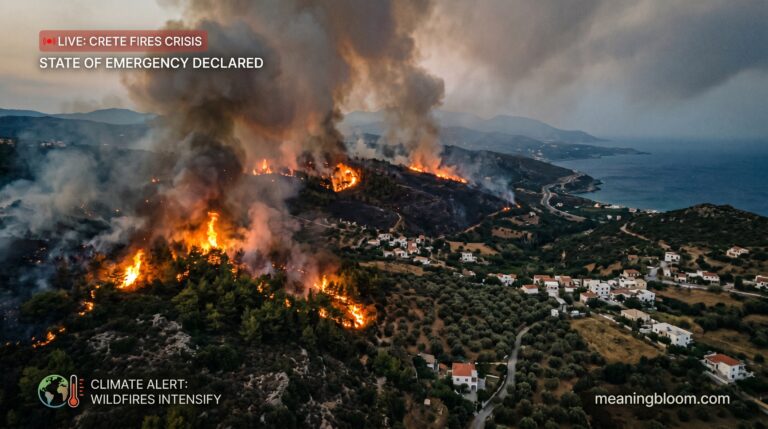
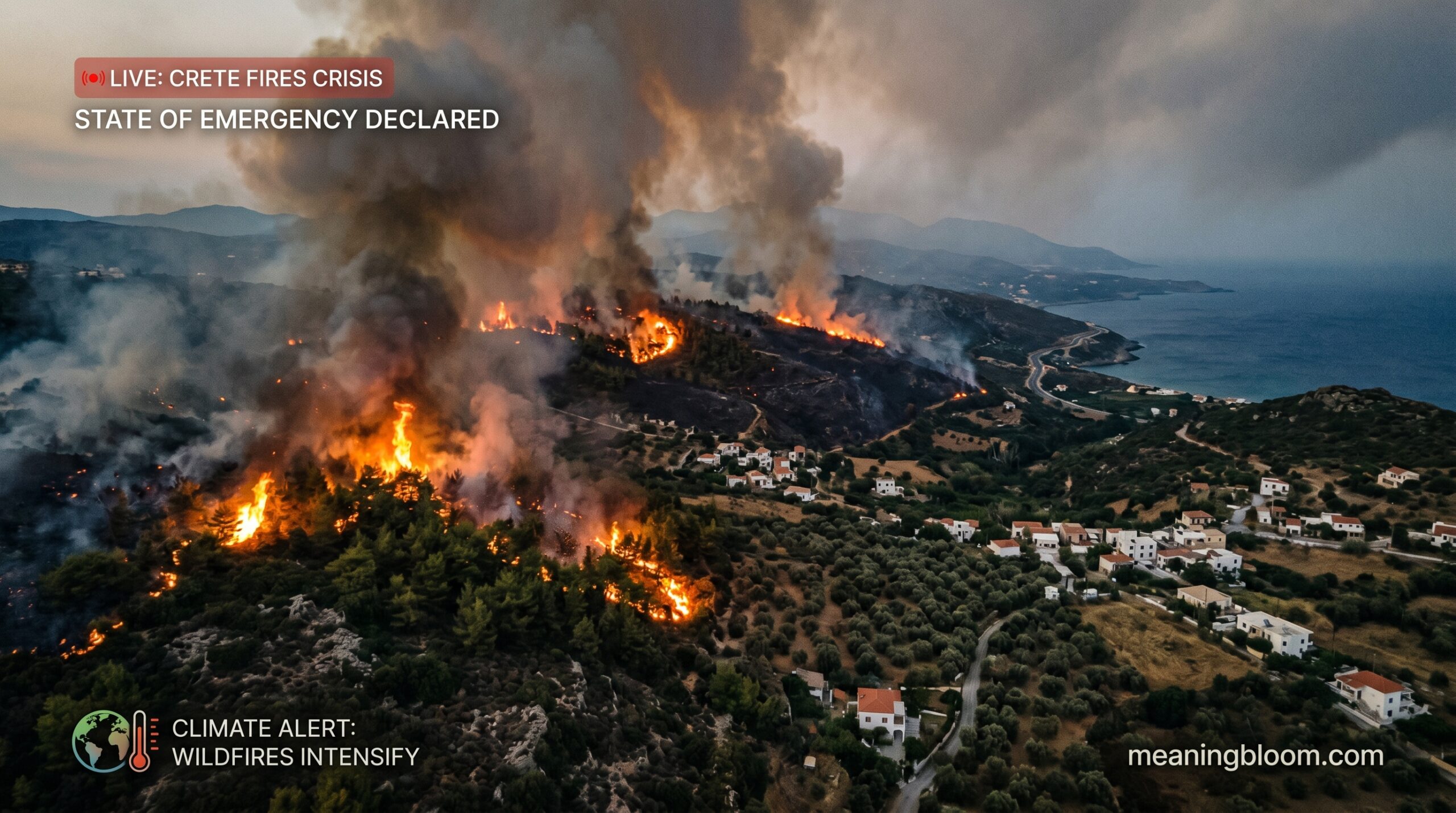

Crete fires have become one of the most serious environmental, ecological, and socio-economic challenges in the Mediterranean region. The keyword Crete fires refers to the recurring wildfires that occur on the Greek island of Crete, destroying forests, wildlife habitats, agricultural land, and sometimes threatening human settlements.
In recent years, Crete fires have increased in frequency and intensity, raising global concern about climate change, rising temperatures, and human negligence. These fires are not just local disasters; they are part of a wider global environmental crisis affecting many countries in Southern Europe.
What Are Crete Fires?
Definition and Basic Understanding
Crete fires are wildfires that occur in forests, grasslands, and rural regions of Crete, the largest island of Greece. These fires spread rapidly during dry summer months due to high temperatures, strong winds, and dry vegetation.
Crete’s natural environment includes mountains, olive groves, pine forests, and shrubs. While this landscape is beautiful, it becomes extremely flammable during heatwaves, making Crete fires a recurring danger.
Geographic and Climatic Background
Crete lies in the southern Mediterranean climate zone. This means:
- Hot and dry summers
- Mild and wet winters
- Long drought periods in summer
- Strong seasonal winds
These conditions make fire ignition and spread very easy, especially when vegetation becomes dry and brittle.
Why Crete Fires Are Important to Study
Studying Crete fires is important because they:
- Help understand climate change impacts
- Show risks of human-environment interaction
- Affect tourism-based economy
- Damage biodiversity and ecosystems
- Provide lessons for global wildfire management
Causes of Crete Fires
Climate Change and Global Warming
One of the most powerful drivers of Crete fires is climate change. Rising global temperatures have increased:
- Heatwaves frequency
- Drought conditions
- Dry vegetation accumulation
- Evaporation rates
As a result, forests become highly flammable, even from small ignition sources.
Human Activities and Negligence
A large percentage of Crete fires are caused directly or indirectly by humans. Common reasons include:
- Uncontrolled agricultural burning
- Discarded cigarette butts
- Campfires left unattended
- Electrical faults
- Machinery sparks in dry fields
- Illegal land clearing using fire
Even a small mistake can turn into a massive wildfire under dry and windy conditions.
Natural Causes
Although less common, natural factors also contribute:
- Lightning strikes during thunderstorms
- Spontaneous ignition in extremely dry vegetation
- Wind-driven fire spread from nearby regions
However, natural causes are much less frequent compared to human-related causes.
Wind Influence
Strong Mediterranean winds play a major role in spreading Crete fires. Winds can:
- Carry flames across long distances
- Change fire direction suddenly
- Make firefighting extremely difficult
- Increase oxygen supply to fire
Historical Background of Crete Fires
Early Fire Incidents
Crete has experienced wildfires for centuries, but earlier incidents were smaller and less destructive due to lower population density and more natural forest cover.
Modern Era Fire Increase
In the last few decades, Crete fires have become:
- More frequent
- More intense
- More destructive
This is linked to climate change, urban expansion, and land-use changes.
Major Fire Seasons
Some fire seasons in Crete have caused:
- Thousands of hectares burned
- Evacuation of villages
- Loss of agricultural land
- Emergency military support
These events highlight the increasing danger of Crete fires.
Government and EU Response
Greek authorities and the European Union have supported firefighting efforts through:
- Firefighting aircraft deployment
- Emergency funding
- Cross-border assistance
- Advanced fire monitoring systems
Despite this, Crete fires remain a recurring challenge.
Environmental Impact of Crete Fires
Forest Ecosystem Destruction
Forests in Crete contain pine trees, shrubs, and endemic plants. When Crete fires occur:
- Entire forests can be destroyed within hours
- Tree regeneration takes decades
- Soil becomes degraded
- Ecosystems collapse temporarily or permanently
Biodiversity Loss
Wildlife is heavily affected:
- Birds lose nesting areas
- Small mammals are unable to escape
- Reptiles and insects die in large numbers
- Rare species face habitat loss
This disrupts ecological balance.
Soil Damage and Erosion
After Crete fires, soil becomes:
- Dry and weak
- Nutrient-depleted
- Vulnerable to erosion
Rainfall after fires often causes landslides and further land degradation.
Air Pollution
Wildfires release:
- Carbon monoxide
- Carbon dioxide
- Fine particulate matter (PM2.5)
This causes:
- Breathing problems
- Reduced air quality
- Visibility issues
- Long-term health risks
Economic Impact of Crete Fires
Tourism Industry Damage
Crete depends heavily on tourism. Crete fires affect tourism by:
- Damaging natural attractions
- Creating negative travel perceptions
- Causing temporary travel restrictions
- Reducing hotel bookings
Agricultural Losses
Agriculture is another key sector. Fires destroy:
- Olive groves
- Vineyards
- Crops
- Livestock grazing areas
Farmers suffer long-term financial losses.
Infrastructure Damage
Severe fires can damage:
- Homes
- Roads
- Power lines
- Communication systems
Repair costs are extremely high.
Government Financial Burden
Fire recovery requires:
- Emergency response spending
- Reconstruction costs
- Environmental restoration projects
This increases national expenditure significantly.
Social Impact of Crete Fires
Human Displacement
During severe Crete fires, people may:
- Evacuate villages
- Relocate temporarily
- Lose homes permanently
Psychological Effects
Fire disasters cause:
- Stress
- Anxiety
- Trauma
- Fear of future fires
Community Disruption
Local communities face:
- Loss of livelihoods
- Disruption of daily life
- Reduced economic stability
Firefighting Systems in Crete
Ground Firefighting Units
Firefighters use:
- Fire trucks
- Water hoses
- Bulldozers
- Manual tools
They often work in dangerous and extreme heat conditions.
Aerial Firefighting
Aircraft are essential for controlling Crete fires:
- Helicopters drop water
- Airplanes release fire retardants
- Aerial monitoring detects hotspots
Technology and Monitoring
Modern systems include:
- Satellite tracking
- Drone surveillance
- AI-based fire prediction models
- Weather monitoring systems
Emergency Response Systems
Greece uses:
- Emergency alerts (SMS warnings)
- Evacuation protocols
- Civil protection coordination
Prevention of Crete Fires
Forest Management
Effective prevention includes:
- Clearing dry vegetation
- Creating firebreaks
- Controlled burning
- Regular forest maintenance
Public Awareness Campaigns
Education helps reduce human-caused fires:
- Fire safety training
- Awareness advertisements
- School education programs
Legal Enforcement
Strict laws include:
- Heavy fines for negligence
- Restrictions on burning
- Penalties for illegal land clearing
Climate Action Measures
Long-term solutions require:
- Reducing carbon emissions
- Renewable energy adoption
- Global environmental cooperation
Future Risks of Crete Fires
Increasing Temperatures
Climate models predict:
- More heatwaves
- Longer drought periods
- Higher fire risk seasons
Urban Expansion
More construction near forests increases:
- Fire exposure risk
- Human-fire interaction
- Emergency evacuation challenges
Resource Limitations
Future challenges include:
- Limited firefighting resources
- High operational costs
- Increasing demand for emergency services
How Locals Can Stay Safe
Emergency Preparedness
Residents should keep:
- Emergency kits
- Water supplies
- Important documents
- Evacuation plans
Staying Updated
People should follow:
- Weather alerts
- Government warnings
- Fire danger maps
Safe Behavior Practices
Avoid:
- Burning waste in dry season
- Leaving open flames unattended
- Ignoring fire warnings
Read Also: Fires in Crete: Causes, Impact, Safety, and Recovery Efforts
Conclusion
Crete fires represent one of the most serious environmental threats facing the Mediterranean region today. As explained throughout this article, the keyword Crete fires is closely linked with climate change, human negligence, and natural environmental conditions.
These fires damage forests, wildlife, agriculture, tourism, and human life. If proper preventive measures are not taken, Crete fires will continue to increase in frequency and intensity, causing even greater destruction in the future.
A combination of strong government action, public awareness, advanced technology, and global climate responsibility is essential to reduce the risks of Crete fires and protect the island’s natural beauty and economy.