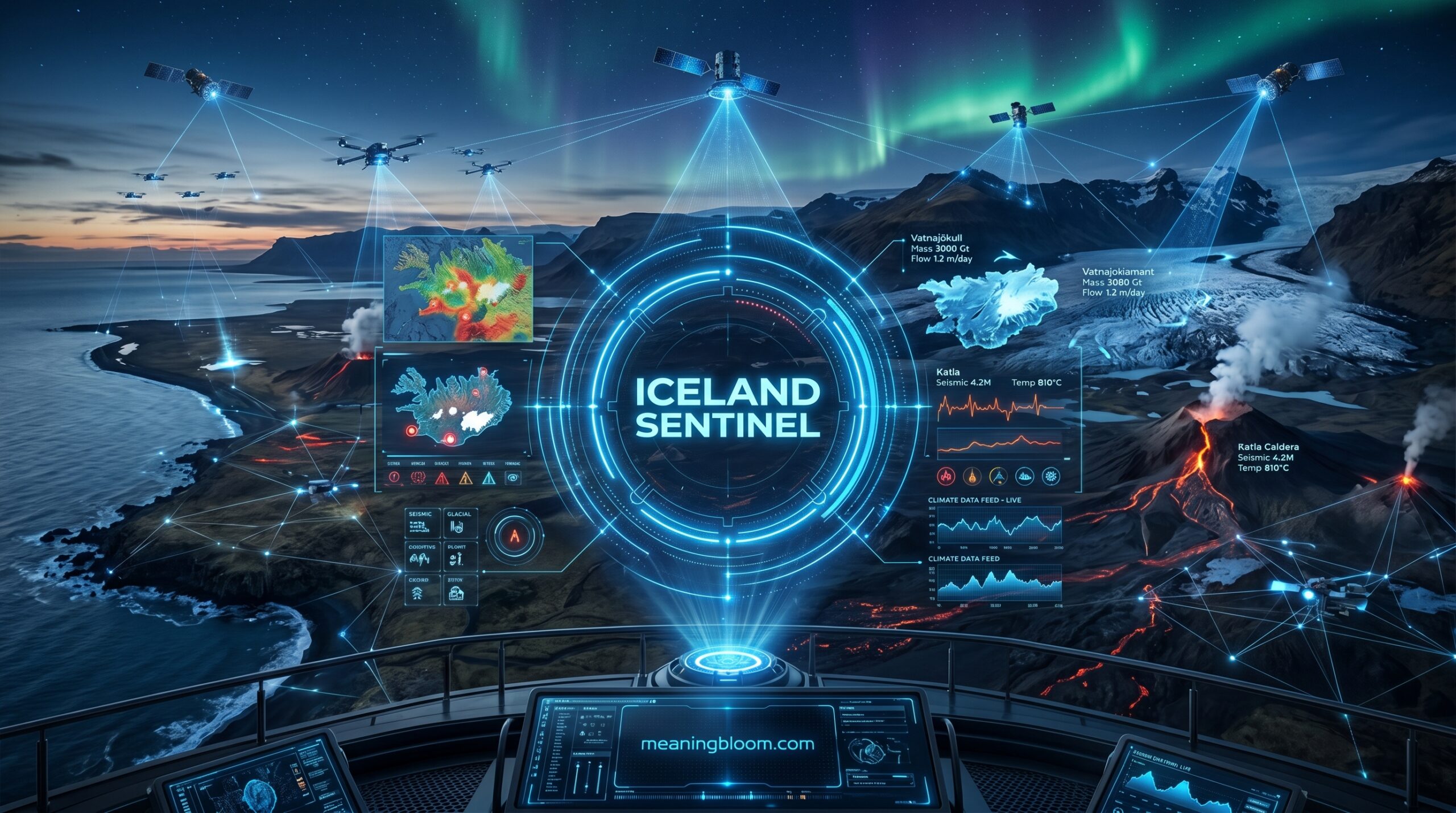

Iceland Sentinel is a powerful and evolving concept that represents advanced monitoring, environmental protection, and strategic surveillance focused on Iceland’s unique geographic and geopolitical position. In simple terms, Iceland Sentinel refers to a system—either real or conceptual—that continuously observes natural, environmental, and security-related activities in and around Iceland.
In today’s rapidly changing world, where climate change, volcanic activity, and global security concerns are increasing, the importance of systems like Iceland Sentinel is becoming more relevant than ever. Iceland is not just a beautiful island nation; it is also one of the most geologically active and strategically positioned locations on Earth. This makes it a natural hub for environmental research, early warning systems, and international surveillance networks.
This article provides a deep, detailed, and expanded exploration of Iceland Sentinel, covering its meaning, evolution, technological structure, environmental role, security applications, real-world relevance, challenges, and future potential in a world driven by data and artificial intelligence.
Understanding the Core Concept of Iceland Sentinel
The word “sentinel” means a guard, watcher, or protector. When combined with Iceland, it creates a concept of a digital and environmental guardian that constantly observes and analyzes changes in Iceland’s natural and strategic environment.
Iceland Sentinel can be understood in three major layers:
Environmental Sentinel
Monitoring natural activities such as:
- Volcanoes
- Earthquakes
- Glacier movements
- Ocean currents
- Climate shifts
Strategic Sentinel
Observing geopolitical and defense-related elements:
- Airspace monitoring
- Maritime tracking
- Arctic route surveillance
- Early warning defense systems
Digital Sentinel
AI-powered systems that analyze real-time data:
- Satellite imaging systems
- Machine learning prediction models
- Sensor networks
- Cloud-based data processing platforms
Together, these layers form the foundation of Iceland Sentinel as a modern intelligent system.
Why Iceland is Perfect for a Sentinel System
Iceland is one of the most unique countries on Earth due to its geography and natural activity.
Location Advantage
Iceland is located between:
- North America
- Europe
This makes it a natural bridge for:
- Air routes
- Ocean navigation
- Data relay systems
- Military and scientific observation
Geological Activity
Iceland sits on the Mid-Atlantic Ridge, meaning:
- Constant tectonic movement
- Frequent earthquakes
- Active volcanoes
This makes real-time monitoring essential.
Climate Sensitivity
Iceland is heavily affected by:
- Global warming
- Glacial melting
- Ocean temperature changes
This makes it a key climate research zone.
Strategic Importance
Due to Arctic access and North Atlantic positioning:
- It is important for NATO operations
- It is critical for maritime security
- It is a gateway for polar routes
All these factors make Iceland Sentinel not just useful—but necessary.
Historical Evolution of Monitoring in Iceland
Before modern technology, Iceland relied on manual observation systems.
Early Observation Methods
- Human-based volcanic monitoring
- Weather observation stations
- Basic seismic measurement tools
Satellite Era
With satellites, Iceland gained:
- Real-time volcanic tracking
- Glacier imaging
- Weather forecasting improvements
Digital Transformation
Modern systems introduced:
- AI-based predictions
- IoT sensor networks
- Big data analysis tools
Modern Sentinel Concept
Now the idea has evolved into Iceland Sentinel, combining all technologies into a unified intelligent monitoring framework.
Technological Structure of Iceland Sentinel
A modern Iceland Sentinel system would rely on multiple technologies working together.
Satellite Monitoring Systems
Satellites provide:
- High-resolution imagery
- Thermal detection of volcanoes
- Ice cap analysis
- Ocean surface tracking
These satellites continuously feed data into monitoring systems.
Artificial Intelligence (AI)
AI plays a central role in Iceland Sentinel by:
- Detecting patterns in seismic data
- Predicting volcanic eruptions
- Identifying glacier movement trends
- Analyzing climate shifts
AI transforms raw data into meaningful predictions.
IoT Sensor Networks
Thousands of small sensors can be placed across Iceland to monitor:
- Ground vibrations
- Gas emissions
- Temperature changes
- Ice thickness
- Water levels
These sensors send real-time updates to central systems.
Big Data Analytics
Massive datasets collected from satellites and sensors are processed using:
- Cloud computing
- Data mining algorithms
- Predictive analytics tools
This helps in decision-making and risk management.
Communication Systems
Fast communication networks ensure:
- Instant alerts
- Emergency notifications
- Government coordination
- Scientific collaboration
Environmental Importance of Iceland Sentinel
One of the biggest roles of Iceland Sentinel is protecting the environment.
Volcano Monitoring
Iceland has many active volcanoes such as:
- Eyjafjallajökull
- Katla
- Hekla
A sentinel system can:
- Predict eruptions
- Measure magma movement
- Reduce aviation risks
Glacier Tracking
Iceland’s glaciers are melting due to climate change.
The system monitors:
- Ice loss rates
- Seasonal melting patterns
- Long-term climate impact
Earthquake Detection
Real-time seismic tracking helps:
- Warn residents early
- Protect infrastructure
- Reduce casualties
Ocean Monitoring
Surrounding waters are tracked for:
- Temperature changes
- Currents
- Marine ecosystem health
Iceland Sentinel in Global Security
Beyond environment, Iceland Sentinel has strategic importance.
Arctic Surveillance
As Arctic ice melts, new sea routes open. Iceland becomes a monitoring hub.
Maritime Security
It helps track:
- Cargo ships
- Fishing vessels
- Submarine activity
Airspace Control
Supports:
- Flight route optimization
- Weather hazard avoidance
- Military airspace monitoring
NATO Collaboration
Iceland’s strategic role in defense makes sentinel systems valuable for international security.
Artificial Intelligence in Iceland Sentinel
AI is the brain of the system.
Machine Learning Models
AI learns from past data to improve future predictions.
Pattern Recognition
It identifies:
- Early eruption signals
- Climate anomalies
- Seismic patterns
Automation
AI can:
- Send alerts automatically
- Activate warning systems
- Update risk maps in real time
Real-World Applications of Iceland Sentinel
Even if conceptual, its applications are very real:
Disaster Management
Helps governments respond quickly to:
- Volcano eruptions
- Earthquakes
- Flooding risks
Aviation Safety
Protects airlines from:
- Ash clouds
- Weather disruptions
- Route hazards
Scientific Research
Supports studies in:
- Geology
- Climate science
- Oceanography
Tourism Safety
Ensures safer travel experiences in Iceland.
Economic Impact of Iceland Sentinel
A system like this also has economic benefits:
Reduced Disaster Losses
Early warnings reduce financial damage.
Tourism Growth
Safer environment attracts more tourists.
Scientific Funding
International research funding increases.
Technology Jobs
Creates jobs in:
- AI development
- Data science
- Engineering
- Environmental research
Challenges Facing Iceland Sentinel
Despite its advantages, there are challenges:
Harsh Environment
- Extreme cold
- Storms
- Remote locations
High Cost
Advanced systems require:
- Satellites
- Infrastructure
- Maintenance
Data Overload
Massive data requires:
- Strong storage systems
- Fast processing power
Prediction Limitations
Nature is unpredictable, so accuracy is never perfect.
Future of Iceland Sentinel
The future is highly advanced and promising.
Full AI Integration
Systems will become fully autonomous.
Space-Based Monitoring
More satellites will improve accuracy.
Real-Time Global Networks
Iceland Sentinel may connect with:
- Arctic monitoring systems
- European climate networks
- Global disaster systems
Quantum Computing
Future systems may use quantum computing for faster predictions.
Smart Environmental Protection
Automated systems will actively protect ecosystems.
Iceland Sentinel as a Global Model
Iceland Sentinel can become a model for other countries:
- Volcano monitoring in Japan
- Earthquake systems in California
- Climate tracking in Arctic regions
Its framework can be replicated worldwide.
Conclusion
Iceland Sentinel represents a powerful and futuristic concept that combines environmental monitoring, artificial intelligence, and global security into one intelligent system. It reflects the growing need for advanced technology to protect fragile ecosystems and manage natural disasters in real time.
As climate change continues and global risks increase, systems like Iceland Sentinel will play a crucial role in safeguarding both human life and the environment. From volcano tracking to AI-based prediction models, its applications are vast and transformative.
Ultimately, Iceland Sentinel is not just a system—it is a vision of the future where technology and nature work together to create a safer, smarter, and more sustainable world.