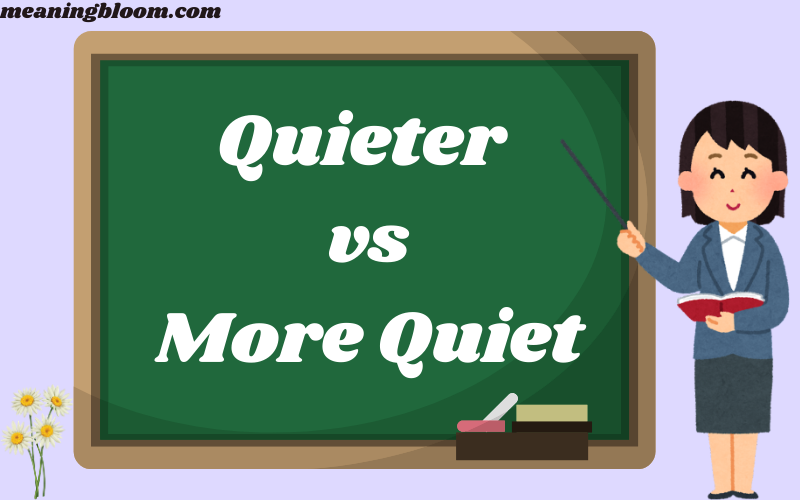

Have you ever paused mid-sentence and wondered whether to write quieter or more quiet? At first glance, the choice seems simple. After all, both forms exist. But the moment you stop to think about it, doubt creeps in. Which one is correct? Which one sounds more natural? And why does one feel smoother in everyday speech?
This confusion happens because English comparatives don’t always follow one neat rule. While many short adjectives simply add -er (tall → taller, fast → faster), others seem to give us two possible options. Quiet is one of those tricky cases. You’ll hear people say quieter, but you might also encounter more quiet in books, formal writing, or descriptive passages.
So what’s the difference?
The answer isn’t just about grammar. It’s about rhythm, tone, emphasis, and context. Native speakers often choose instinctively based on how a sentence feels — not just on rules they memorized in school.
In this complete guide, you’ll learn:
- How English comparatives really work
- Why quieter is usually the preferred form
- When more quiet is appropriate
- How tone and writing style influence the choice
- Which form sounds natural in different real-world situations
By the end, you won’t just know which option is correct — you’ll understand why one works better than the other in specific contexts. And that understanding is what transforms hesitation into confidence.
What Does “Quiet” Really Mean?
Before comparing forms, it helps to understand the word itself.
Quiet is an adjective that describes:
- A low level or absence of sound
- Calmness or stillness
- Peaceful behavior or atmosphere
Examples:
- The office is quiet in the early morning.
- He answered in a quiet voice.
- After the guests left, the house felt quiet.
Because quiet is an adjective, it naturally changes form when we want to compare things.
How Comparatives Work in English
Comparative adjectives are used when comparing two people, places, or things.
Examples:
- This room is smaller than that one.
- Today is colder than yesterday.
The General Rule
English usually follows these patterns:
- One‑syllable adjectives → add ‑er
- tall → taller
- fast → faster
- Longer adjectives → use more + adjective
- careful → more careful
- beautiful → more beautiful
Where It Gets Tricky
Some two‑syllable adjectives don’t follow just one rule. Quiet is one of them.
That’s why both of these forms exist:
- quieter
- more quiet
Grammatically, neither is wrong. Stylistically, however, they’re not equal.
“Quieter”: The Natural, Everyday Choice
Quieter is the comparative form most native speakers instinctively choose.
Why?
- It’s shorter
- It flows better in speech
- It sounds more natural in modern English
Common Examples
- This café is quieter than the one near my office.
- Please try to be quieter during the presentation.
- The neighborhood gets quieter after midnight.
In everyday conversation, journalism, and professional writing, quieter feels smooth and effortless.
Why “Quieter” Sounds Better
English favors economy—saying more with fewer syllables. Quieter delivers the comparison quickly, without interrupting the rhythm of the sentence.
That’s why it dominates:
- Casual speech
- News headlines
- Business writing
- Online content
If you’re ever unsure which form to use, quieter is the safe choice.
“More Quiet”: Correct, but Purposeful
Although less common, more quiet is still grammatically valid.
So when would someone choose it?
Situations Where “More Quiet” Fits
Writers and speakers often use more quiet when they want to:
- Emphasize a gradual change
- Create a slower rhythm
- Sound formal, reflective, or descriptive
- Add emotional or literary nuance
Examples
- The room grew more quiet as the announcement sank in.
- Her voice became more quiet with every sentence.
- The town felt more quiet after the snowfall.
In these sentences, more quiet draws attention to the process of becoming quieter, not just the result.
A Helpful Tip
If your sentence could naturally include phrases like slowly, gradually, or increasingly, more quiet may sound appropriate.
Tone and Rhythm: The Hidden Difference
The real distinction between quieter and more quiet isn’t grammar—it’s style.
| Form | Effect | Best For |
| quieter | Direct, efficient | Conversation, media, general writing |
| more quiet | Gentle, measured | Literature, academic tone, description |
Think of it like music:
- Quieter is a quick note.
- More quiet is a drawn‑out pause.
Both are correct—the mood decides.
Real‑World Usage by Context
Everyday Conversation
Native speakers almost always choose quieter.
“It’s much quieter here than outside.”
News & Media
Clarity and brevity matter, so quieter dominates.
“Streets are quieter following the new policy.”
Academic Writing
Formality sometimes favors more quiet, especially before nouns.
“Participants worked better in a more quiet environment.”
Creative & Literary Writing
Writers often choose more quiet for atmosphere.
“The forest became more quiet as dusk settled in.”
Superlative Forms: Quietest vs. Most Quiet
When comparing three or more things, we use superlatives.
Quietest
- Most common
- Sounds natural
- Preferred in modern English
Example:
- This is the quietest room in the building.
Most Quiet
- Grammatically correct
- Formal or old‑fashioned tone
- Occasionally used for emphasis
Example:
- She was the most quiet student in the class.
In everyday usage, quietest is strongly preferred.
“Quieter” vs. “Less Noisy”
These phrases overlap, but they’re not identical.
| Phrase | Focus | Tone |
| quieter | Calm, peaceful | Emotional, atmospheric |
| less noisy | Noise reduction | Neutral, technical |
Examples:
- The countryside is quieter at night. (mood)
- The new engine is less noisy. (measurement)
Choose based on feeling vs. fact.
Common Grammar Mistakes to Avoid
Even fluent speakers make these errors.
❌ More Quieter
This is a double comparative.
✔ Correct:
- quieter
- more quiet
❌ Speak Quiet
Quiet is an adjective, not an adverb.
✔ Correct:
- Speak quietly.
❌ Overusing “More Quiet”
Using more quiet in casual speech can sound stiff or unnatural.
✔ Use it intentionally, not habitually.
Fixed Expressions and Idioms with “Quiet”
English uses quiet in many set phrases.
Common Idioms
- As quiet as a mouse – extremely silent
- Peace and quiet – calm and rest
- The quiet before the storm – calm before chaos
These expressions never change form, so don’t try to modify them.
How to Decide Instantly: A Practical Guide

Ask yourself one quick question:
Am I focusing on clarity or atmosphere?
- Clarity → quieter
- Atmosphere → more quiet
Quick Reference Table
| Situation | Best Choice |
| Daily conversation | quieter |
| Blog or web content | quieter |
| Academic paper | more quiet |
| Descriptive writing | more quiet |
| Professional email | quieter |
Examples Across Writing Styles
Casual
“It’s quieter here than my apartment.”
Professional
“The workspace is quieter after hours.”
Academic
“Students showed improved focus in a more quiet setting.”
Creative
“The room grew more quiet, heavy with unspoken thoughts.”
Each choice supports a different purpose.
Frequently Asked Questions
Are “quieter” and “more quiet” both correct?
Yes. Both are grammatically correct, but quieter is far more common in modern English.
Which one should learners use?
Use quieter unless you have a specific stylistic reason not to.
Is “most quiet” wrong?
No, but it sounds formal or old‑fashioned. Quietest is preferred.
Can I replace “quieter” with “less noisy”?
Sometimes, but the tone changes. Less noisy is factual; quieter is emotional.
Final Thoughts
English isn’t just about rules—it’s about feel.
- Quieter is efficient, natural, and modern.
- More quiet is slower, softer, and expressive.
Both belong in the language. Knowing when to use each one gives your writing confidence, flexibility, and polish.
Mastering small choices like this is what turns good English into great English—clear, intentional, and human.
FAQs
Is it correct to say “quieter” or “more quiet”?
Both are grammatically correct. However, quieter is far more common in modern English and is the preferred choice in everyday speech and writing. More quiet is usually reserved for formal, academic, or descriptive contexts where a slower tone is intentional.
Why does “quieter” sound more natural?
English generally prefers shorter comparative forms for two-syllable adjectives like quiet. Adding -er makes the sentence flow better and sound more natural. That’s why native speakers instinctively say:
- “It’s quieter here.”
- “Please be quieter.”
When should I use “more quiet”?
Use more quiet when you want to emphasize a gradual change or create a softer, more reflective tone. It often appears in:
- Academic writing
- Formal descriptions
- Creative or literary passages
Example:
“The room became more quiet as the meeting progressed.”
Is “more quieter” correct?
No. “More quieter” is incorrect because it’s a double comparative. You should choose only one form:
✔ quieter
✔ more quiet
❌ more quieter
What is the superlative form of “quiet”?
The most natural superlative form is quietest.
Example:
“This is the quietest place in the house.”
While most quiet is technically correct, it sounds formal or old-fashioned and is rarely used in everyday English.
Is “quieter” formal or informal?
Quieter works in both formal and informal contexts. It is completely acceptable in professional emails, academic papers, and business writing. It is not informal — it’s simply the standard modern form.
Can I replace “quieter” with “less noisy”?
Sometimes, yes — but the tone changes.
- Quieter often suggests calmness or atmosphere.
- Less noisy focuses specifically on sound reduction.
Example:
- “The countryside is quieter at night.” (mood and peace)
- “The new machine is less noisy.” (technical measurement)
Which form should English learners use?
If you’re unsure, always choose quieter. It is the safest, most natural, and most widely accepted option in modern English. Only use more quiet when you have a clear stylistic reason.
Are you stuck on grammar? You can see our more free guides:
- Feel Vs Felt? The One Spelling Rule You Must Never Get Wrong
- Sale vs Sail? The One Spelling Rule You Must Never Get Wrong
- Swap vs Swop? The One Spelling Rule You Must Never Get Wrong
- Setup vs Set Up? The One Spelling Rule You Must Never Get Wrong
Conclusion
Choosing between quieter and more quiet is not about strict grammar rules — it’s about clarity, tone, and intention.
In modern English, quieter is the clear favorite. It’s concise, natural, and widely used in everyday conversation, professional writing, media, and online content. If your goal is smooth, fluent English that sounds natural to native speakers, quieter should usually be your default choice.
More quiet, while less common, still has value. It slows the rhythm of a sentence and can emphasize gradual change or create a softer, more reflective mood. You’ll often see it in academic, formal, or descriptive writing where tone matters as much as structure.
To keep it simple:
- Use quieter for clarity and natural comparisons.
- Use more quiet when you want stylistic emphasis or a measured tone.
Small distinctions like this may seem minor, but they make a big difference in how polished and confident your writing feels. When you understand not just the rule but the reasoning behind it, you gain control over your language — and that’s what turns good English into powerful, effective communication.